

Why do film photos feel so different to digital, and should you include them in your wedding?

First dance on 35mm film in the Chapel House Estate Glass Courtyard (Portra 400 35mm film).
Analogue media has had a resurgence over the last few years, and it’s not hard to see why. At a time when AI is rapidly advancing and digital imagery is becoming increasingly perfect — ultra-sharp photos, flawlessly stabilised video, perfectly smoothed skin tones — many of us are craving something more human. Something real. Something imperfect in the most beautiful way.
This is where film photography comes back into the conversation, especially when it comes to weddings.
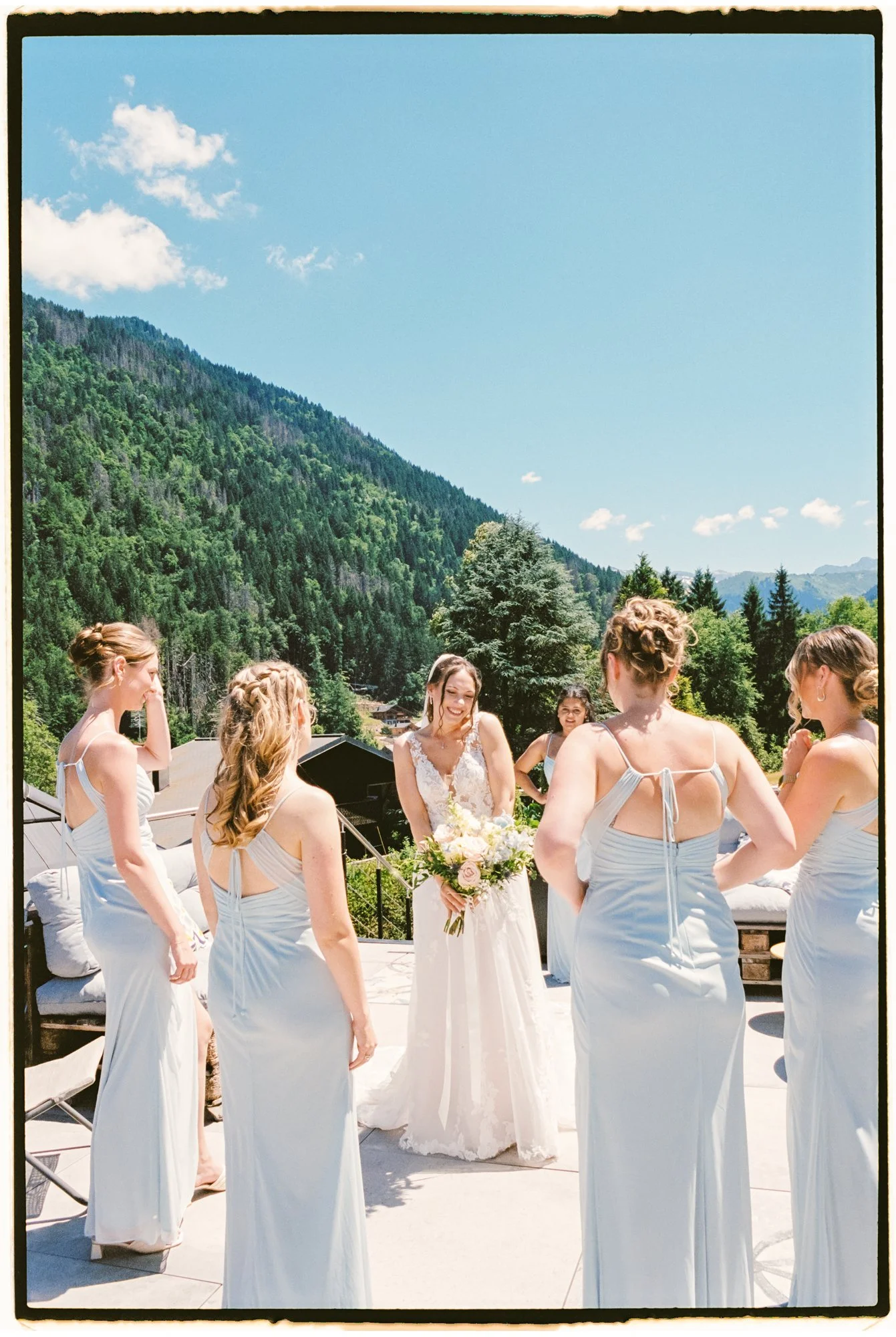
Bride and bridesmaids in Morzine in The Alps, France before leaving for her ceremony on Lake Montriond (Portra 400 35mm film).
The emotional difference between film photography and digital
Digital photography is incredible. It’s fast, flexible, and endlessly editable. But film photography feels different because it is different. When a photo is taken on film, light physically passes through the lens and reacts with light‑sensitive emulsion on the film itself. That moment is captured chemically, not mathematically.
There are no algorithms deciding how the image should look. No AI sharpening edges. No software smoothing skin. Just light, timing, and intent.
That’s why film images often feel:
More emotional
Softer and more organic
Imperfect in a way that feels alive
Timeless rather than trend‑led
You can’t truly fake what film produces — even the best digital presets are only interpretations of what film naturally does.
It’s timeless because it hasn't really changed in decades, and it hasn’t needed to. Your photos aren’t going to look dated in 10 years, because film photography doesn’t follow the styles that are popular at the time - remember the sepia brown era of the 2010s?!

Couple in Chelsea before their ceremony at Chelsea Old Town Hall (Ilford HP5 35mm film).
Why wedding film photography feels so special
Wedding film photography is about more than just beautiful photos. It’s about honesty. You’re not getting a largely edited digital image, because you just can’t with film. What you take is essential what you get, and that’s beautiful.
On a wedding day, moments happen quickly and organically. Film encourages a slower, more intentional approach. Each frame matters. Each press of the shutter is deliberate. That mindset often results in images that feel more considered and emotionally grounded.
This makes film photography especially beautiful for weddings, where emotion, movement and atmosphere matter just as much as clarity.

Grandmother looking after the bride and grooms son. during their ceremony at Danesfield House (Portra 400 35mm film).
Types of film used at weddings
Wedding film photography and videography often includes a mix of formats, each adding its own character:
35mm film photography
The most common film format — similar in size to what disposable cameras use. It’s versatile, quick to shoot, and perfect for candid moments throughout the day.
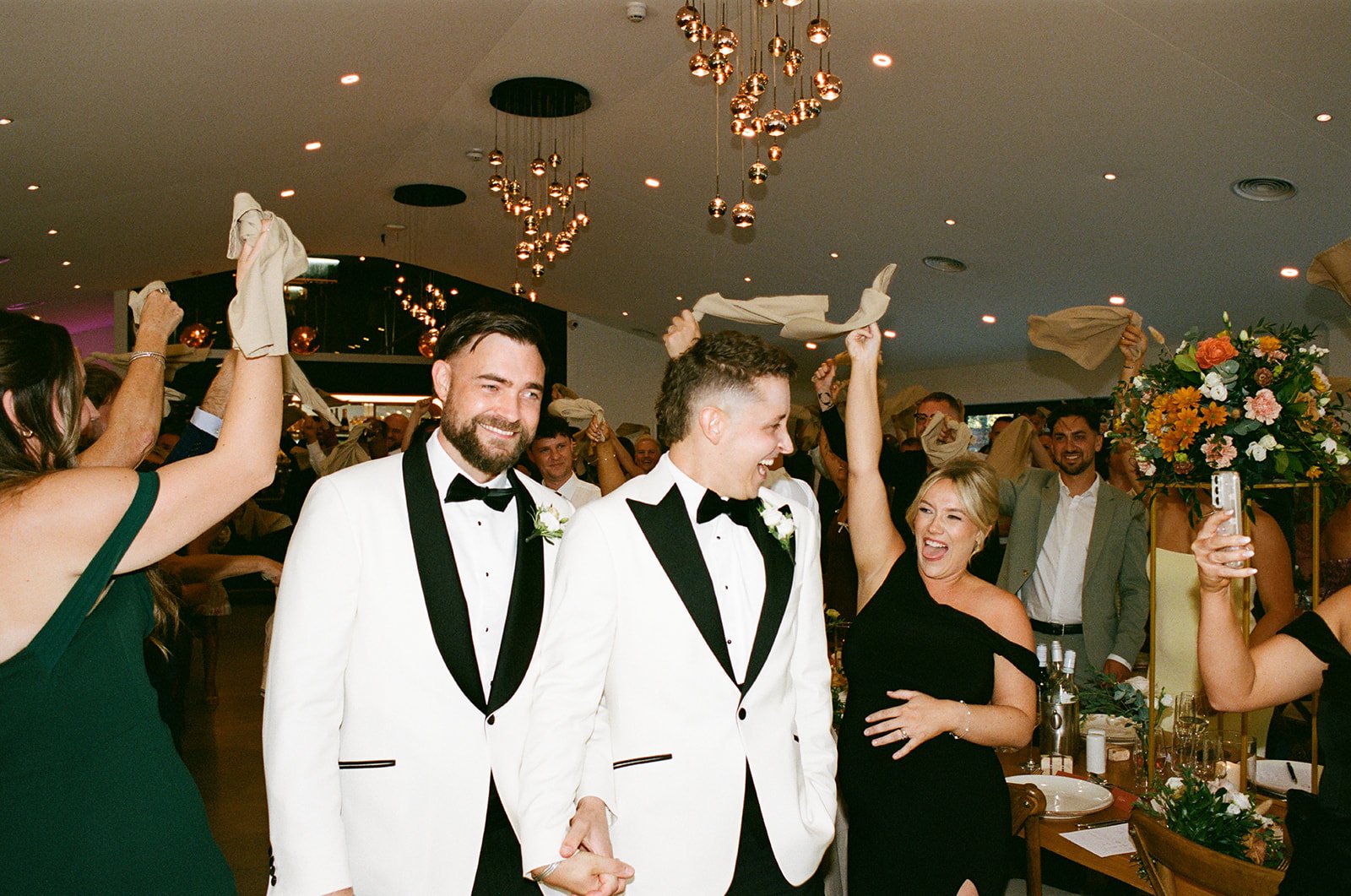
Two grooms entering their reception in Thorne Barn at Chapel House Estate (Portra 400 35mm film).
Medium format (120mm film)
Larger film means more detail and depth. Medium format is often used for portraits and key moments, creating images that feel rich, cinematic and incredibly timeless.
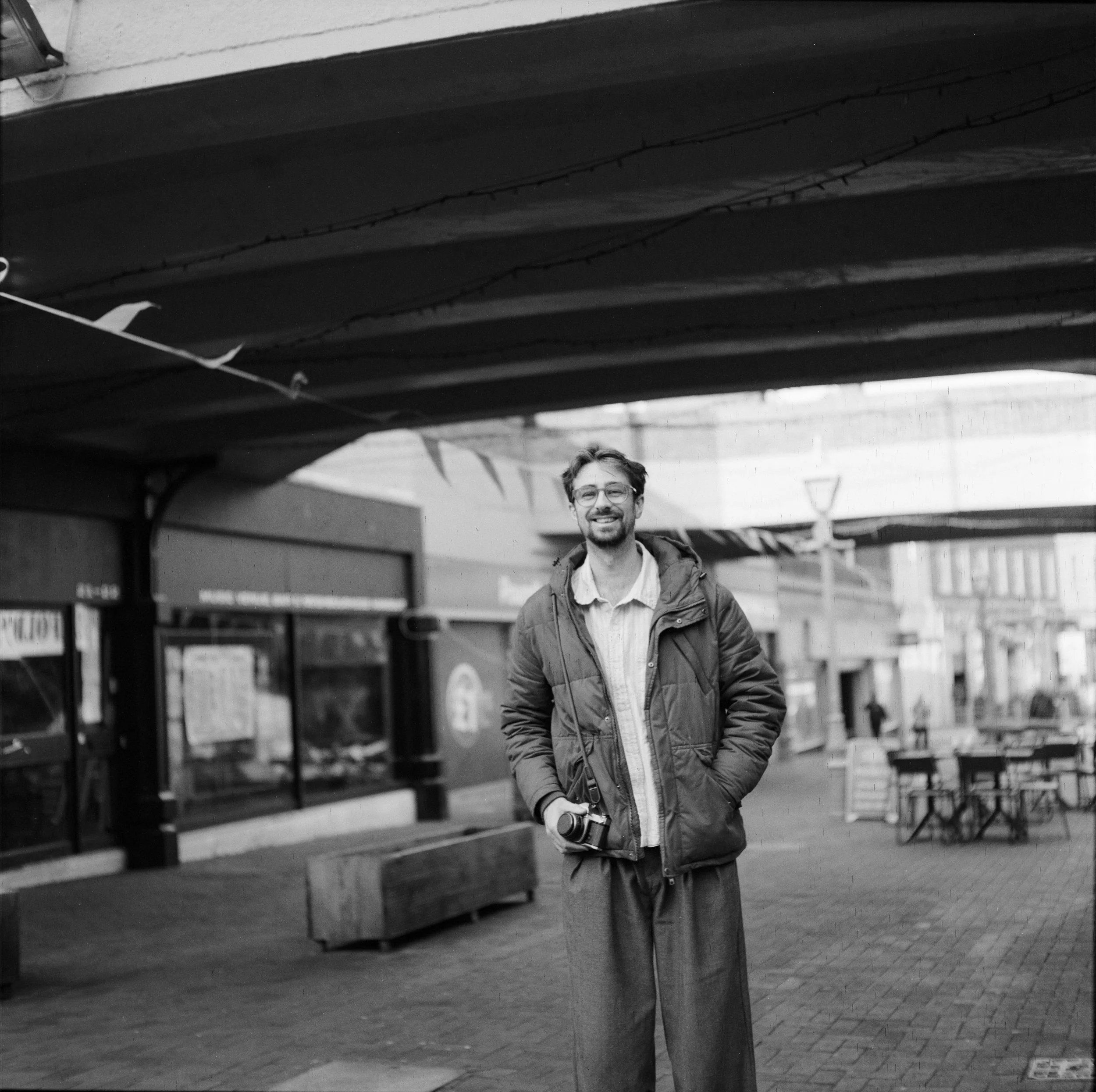
Me taken by Laura in Margate on my Mamiya C330 (Fomopan 200 120mm film).
Super 8 wedding film
Super 8 is a cine‑film format commonly associated with the 70s and 80s. Used for wedding videography, it creates moving images with grain, softness and motion that digital video simply can’t replicate.
Film in a world of AI and perfection
As AI becomes more involved in image creation, many couples are intentionally choosing processes that feel tangible and honest. There’s something incredibly beautiful about knowing your wedding photos weren’t generated or heavily manipulated.
With film photography, the image exists physically. Light hit the film. The moment happened once. The result is real.
Yes, the negatives are scanned so images can be delivered digitally — but the foundation of the photograph is entirely analogue. That knowledge alone adds emotional weight and meaning.
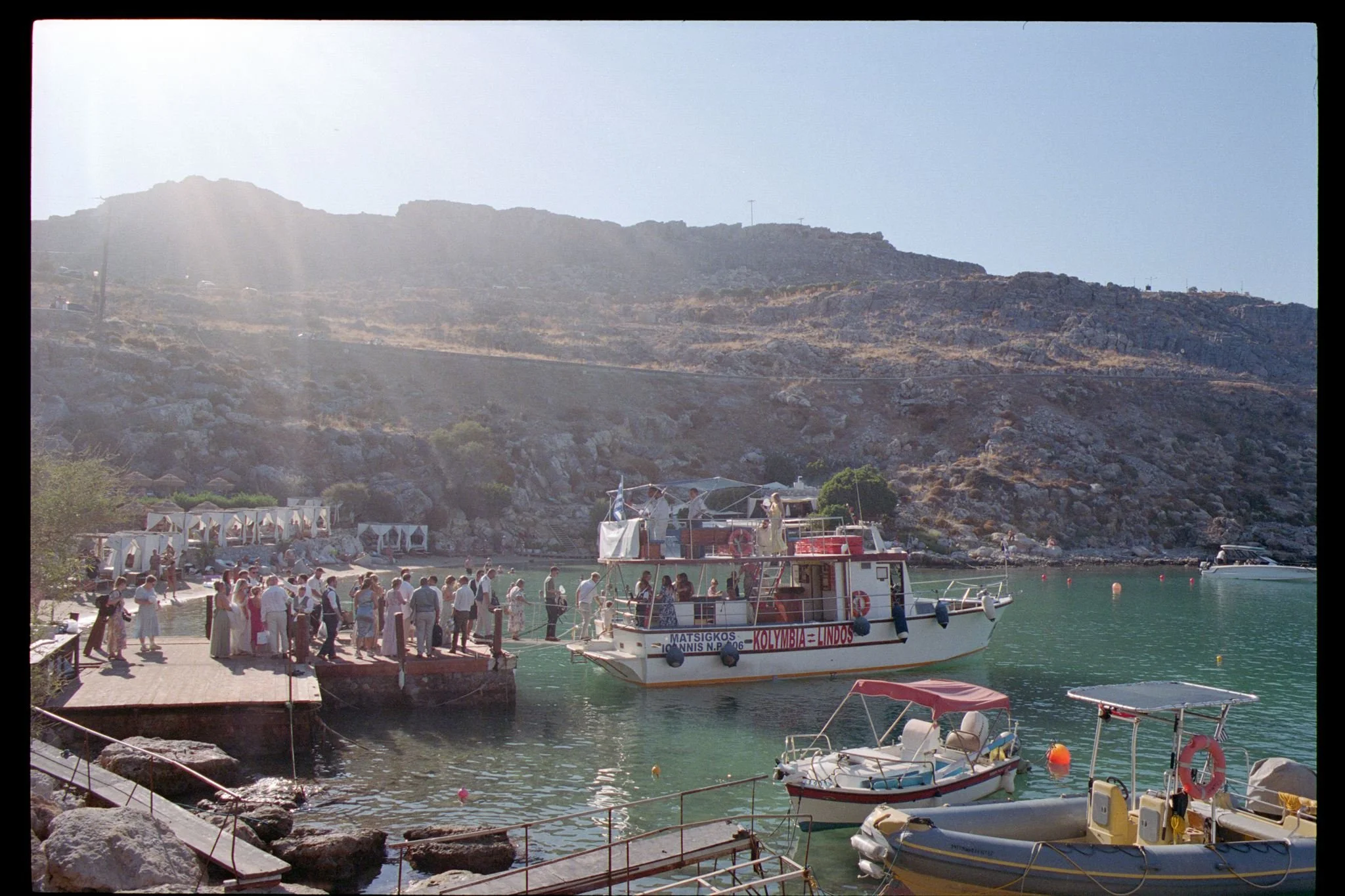
Wedding party getting on their ride to the reception in Lindos, Rhodes (Portra 400 35mm film).
Should you include film photography in your wedding?
If you value:
Timeless photos that won’t feel dated (film hasn’t changed in decades, so it’s literally timeless)
Authentic moments over perfection
A more artistic and documentary approach
The feeling of something truly handcrafted
Then including film photography in your wedding is absolutely worth considering.
More and more couples I work with value film as much as I do, and I therefore prioritise film over digital for those standout moments during a wedding. Nearly all my favourite wedding photos from 2025 are on film.

A couple looking out from the balcony at Chapel House Estate at their wedding guests (Portra 400 35mm film).
Choosing a wedding photographer who shoots film
Not all wedding photographers work with film. If you’re looking for a UK wedding photographer who prioritises film photography, it’s important to choose someone who reflects what film is really about, rather than one who treats it as an ‘add-on’. Film is about intention, honesty and has a distinctly grounded feel.
A photographer experienced in wedding film photography will know when film adds the most value and how to integrate it seamlessly into your day. Not all situations lend themselves to film - so it’s not a one size fits all. Where conditions are good, film all the way.If not, a little more digital will make up a gallery to allow more wriggle room in editing.

A couple walking back towards their reception at Danesfield House (Portra 400 35mm film).
Final thoughts
In a world where everything is becoming faster, sharper, and more automated, film photography offers a quiet rebellion. It embraces imperfection, celebrates human touch, and creates images that feel honest and enduring.
If you’re drawn to that timeless, authentic feeling for your wedding, you can’t get closer to it than choosing film photography.
